• Friday : 09 - October - 2026
  • Time Now : 03:16 AM
English
  • العربية ar
  • English en
  • Français fr
  • Español es
  • 中文 cn
  • Deutsch de
  • 日本語 jp
  • Русский ru
MOI Logo
  • SULTANATE OF OMAN
    • History and Geography
    • The Basic Statue of the State
    • National Flag and Emblem
    • Oman’s National Anthem
    • Governorates of Sultanate of Oman
    • State Institutions
      • Ministries
      • Public Authorities
      • Specialised Councils
      • Councils and Committees
    • Official Holidays
    • The Unified Promotional Identity for the Sultanate of Oman
  • HM Sultan Haitham
    • Cultural Contributions
      • His Majesty the Sultan’s Awards
      • His Majesty the Sultan's Chairs
    • Biography
    • Wise Policies
    • Honorary Orders
    • Photos Album
    • His Majesty Speeches
      • His Majesty Speech January 11, 2020
      • Speech of His Majesty Sultan Haitham Bin Tarik January 11, 2025
      • His Majesty Speech February 23, 2020
      • His Majesty Speech 18/11/2020
      • Speech of His Majesty Sultan Haitham Bin Tarik October,11,2021
      • Speech of His Majesty Sultan Haitham Bin Tarik January,11,2022
      • Speech of His Majesty Sultan Haitham Bin Tarik 14/11/2023
  • The late Sultan Qaboos
    • The Royal Speeches
    • Biography
    • Honorary Orders
    • The Royal Speeches
    • Cultural and Civilized Contribution
  • Ministry of Information
    • Royal Decrees
    • Electronic Platforms
      • Ayn Platform
      • Information Portal Services Guide
    • Media Attachés
    • Omani Media
      • Oman News Agency
      • Oman Radio
      • Oman TV
      • Directorate General of Press, Publishing and Advertising
      • Electronic Media
      • Media Training Center
    • Oman Newspaper
    • Ayn short films Festival
    • Organisational Structure
    • Conduct for Civil Servants
    • About MOI
    • Electronic Services Platform
    • Laws and Media Covenants
  • E-Participation
  • Oman 2040
    • Oman Vision 2040
    • Vision Document
    • National Programs
    • Reports
      • Oman Vision 2040 Report 2022-2023
      • Oman Vision 2040 Report 2023-2024
      • Annual Reports 2021 Citizen Version
      • Annual Reports 2021
    • Pillars and Priorities
    • Initiatives

Al Dhahirah Governorate

Al Dhahirah Governorate

About the Governorate

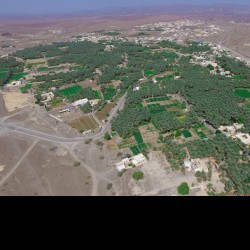
Al Dhahirah Governorate is rich in agriculture, tourism, and history. It has experienced notable development during the years of Oman’s modern renaissance across a wide range of sectors. Al Dhahirah is a semi-desert plain that slopes down from the southern foothills of the Western Hajar Mountains toward the Rub' al Khali Desert. It is separated from the interior of Oman by the Al Khor Mountains to the east and connects to the Rub' al Khali Desert to the west and Al Wusta Governorate to the south.

The governorate consists of three wilayats: Ibri, Yanqul, and Dhank, with Ibri as its administrative center. It is known for its agricultural activity and its location, which historically connected it to other regions of the Arabian Peninsula through an ancient caravan route. The governorate is also home to numerous oil and gas fields and has benefited from significant development projects. According to the latest census, the population of Al Dhahirah Governorate is 244,437.
Governorate Wilayates

The Wilayat of Ibri

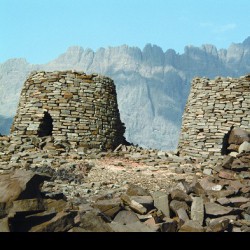
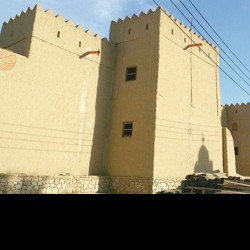
The Wilayat of Ibri is one of the administrative divisions of Al Dhahirah Governorate. It is bordered to the south by the Wilayat of Haima, to the east by Bahla, Al Hamra, and Rustaq, to the north by Al Buraimi, Dhank, and Yanqul, to the northwest by the United Arab Emirates, and to the southwest by the Kingdom of Saudi Arabia. Located approximately 279 km from the capital, Muscat, the wilayat has adopted an emblem featuring two camels and the Khalas palm tree, reflecting its identity and cultural roots. Ibri is renowned for its rich heritage and historical landmarks, including a number of forts, castles, and towers. Among the most notable is the House of Al Sarooj, along with Al-Ainain and Al-Salami Castles. The Sharia Tower, historically used as a watchtower, stands as a key architectural feature of the wilayat's past. In addition to these heritage sites, Ibri is also known for its natural attractions, particularly its springs (Ayoons) and aflaj (traditional irrigation channels). In the village of Muqniat, visitors can explore Ain Al-Haidath and Ayn Al Janat, both surrounded by verdant groves of palm and mango trees. Prominent aflaj include Falaj Al Mafjoor, as well as those of Al Iraqi, Al Ainain, Al Draiz, and Al Qarwan. A significant natural attraction is the village of Dham, located in Wadi Al Ain, which draws numerous visitors—both citizens and residents—especially during the rainy season when waters cascade from Jabal Al-Kour and Jabal Al Akhdar. Jabal Al Kour, in particular, is considered one of the region’s foremost tourist destinations due to its breathtaking scenery. The mountain is accessible via two main routes: one from the Wilayat of Al Hamra in Al Dakhiliyah Governorate and the other from Ibri itself. The wilayat is equally known for its traditional crafts and industries, which remain a cornerstone of local life. Notable crafts include grazing, weaving, and agriculture, with key crops such as dates, wheat, oranges, grapes, citrus fruits, vegetables, and animal fodder. Among the most important traditional industries are the crafting of beshts (men cloaks), manasil (saddle cloths), and embossed leather bags used to adorn camels. Additionally, the people of Ibri continue to practice palm frond weaving, leatherwork, pottery, traditional construction, and the production of Omani Halwa, a beloved local sweet.

Read More

The Wilayat of Dhank

The Wilayat of Dhank is one of the administrative divisions of the Al Dhahirah Governorate. It is bordered to the north by the Wilayat of Mahdah, to the south by the Wilayat of Ibri, to the east by the Wilayat of Yanqul, and to the west by the Wilayat of Al Sunainah. The wilayat has adopted Wadi Dot as its emblem. Dhank is regarded as one of the historically significant wilayats in the region. Among its key landmarks are the farms of Falaj Al-Bazili, located in the western part of the wilayat, and the Imam’s Fort, situated in the central area—both of which attest to the area's long-standing historical importance. Imam Saif bin Sultan Al-Yarubi built Falaj Al-Bazili and cultivated the surrounding lands extensively, while Imam Azzan bin Qais restored the Imam’s Fort during his reign. In Safalat Al-Wahshi area, Ibn Al-Ramtha established Al-Oud Castle, further enriching the historical landscape of the wilayat. In addition to these sites, Dhank is home to several other notable forts, including Al-Sharayi’, Al-Subikhah, Al-Marqou', Al-Aqar, Dot, Al-Jifra, Belt Al-Khali, and Al-Fateh Castle. The wilayat also has six towers, namely: Al-Zafr, Al-Taf, Al-Ghafa, Al-Khali, Abu Karba, and Al-Qalaa. The traditional aflaj system is also prominent in Dhank, with several important falajs such as Al Salad, Al Sama’a, Al Muhaidith, Al Taf, Al Sallalah, Qumaira, Al-Rahba, Belt, Al Fateh, Al Janibi, Al Khali, and Khumat. The wilayat is also home to two natural springs: Al-Masfiya and Bani Sa’dah. Dhank is known for its traditional crafts and industries, which reflect the community’s deep-rooted cultural identity. These include carpentry, blacksmithing, and the cultivation of dates, vegetables, neel (indigo), fruits, and animal fodder. Residents are also engaged in sheep and cattle grazing, palm frond weaving, the production of traditional Omani building materials, and the local Al Neelah industry, which continues to be a hallmark of the wilayat’s artisanal heritage.

Read More

The Wilayat of Yanqul

The Wilayat of Yanqul is one of the administrative divisions of the Al Dhahirah Governorate. It is bordered to the north by the Wilayat of Suhar, to the south and east by the Wilayat of Ibri, and to the west by the Wilayat of Dhank. The wilayat has adopted Jabal Al Hawra (Mount Al Hawra)—its highest mountain peak—as its emblem. Yanqul is widely known for Jabal Al Hawra, which stands as the highest peak in the region and a prominent natural landmark. Scattered across its landscape are approximately 16 historical structures, including towers, castles, and forts, many of which date back several centuries. Among the most significant of these is Bayt Al Marah, a fort that remains standing to this day. The wilayat is also home to a collection of ancient monuments on Jabal Al Khattim, a mountain that rises 600 feet above sea level, where remnants of old buildings can still be found. One of Yanqul’s main tourist attractions is Wadi Al Raki, known for its lush scenery and diverse tree cover. In the village of Al Sudairiyeen, visitors will find another scenic area with abundant water and striking natural beauty. Additionally, the village of Al Waqbah is noted for its numerous valleys (wadis) and refreshing cool climate. Archaeological surveys conducted in Yanqul have uncovered valuable historical sites. In the village of Safri, an ancient burial site dating back to the Samad period was discovered. Another archaeological site was found in the village of Al Madam, which also includes tombs from the same era. Traces of ancient mining activity were found in Al Raki and Al Ma’aidan, and artefacts have been recovered from Jabal Al Khattim. The history of Yanqul is closely tied to several notable figures in Omani political, intellectual, and literary history, including King Makhzoum bin Falah Al Nabhani and Nasser bin Qotton. The wilayat is also recognised for its traditional crafts and industries, which continue to reflect its heritage and local expertise. Among the most prominent are livestock raising, agriculture (notably dates, wheat, sugar cane, citrus fruits, and other crops), along with textile production, palm leaf weaving, jewellery making, trading, and traditional sugar production.

Read More
Previous Next

Attractions in the Governorate

Forts and Castles

Traditional Markets

Archeological Sites

Caves and Nature Reserves

Aflaj

Contact Information

Governor

H.E. Najeeb bin Ali bin Ahmed Al Rawas

Spokesperson

Ahmed bin Rashid bin Humaid Al Marshoudi

Email

dhrgov@dhr.gov.om

Contact Number

25692700 - 25692545 - 41111426

Official Website

https://dhr.gov.om/


Main Links

  • Ayn Platform
  • Oman News Agency
  • Oman Daily Newspaper

Useful Links

  • Injaaz Platform
  • Ejada Platform

Chosen Books

  • AL Wusta

    01 October 2019
  • Muscat

    30 September 2019
  • AL Dakhliya

    01 October 2019

Contact Us

  • National Platform for Suggestions, Complaints and Reports
  • Muscat - Sultanate of Oman
  • Portal@omaninfo.om
  • +96824943333
  • instagram
  • facebook
  • youtube
Media Portal logo Copyright © 2025 Ministry of Information
  • Terms & Conditions
  • E-Payment Policy
  • Privacy
  • Accessibility
  • Site Map
  • User Guide